
Proper Ventilation & Temperature Control: Protecting Your Shed, Barn, Garage or CabinA well-built structure is just the beginning.
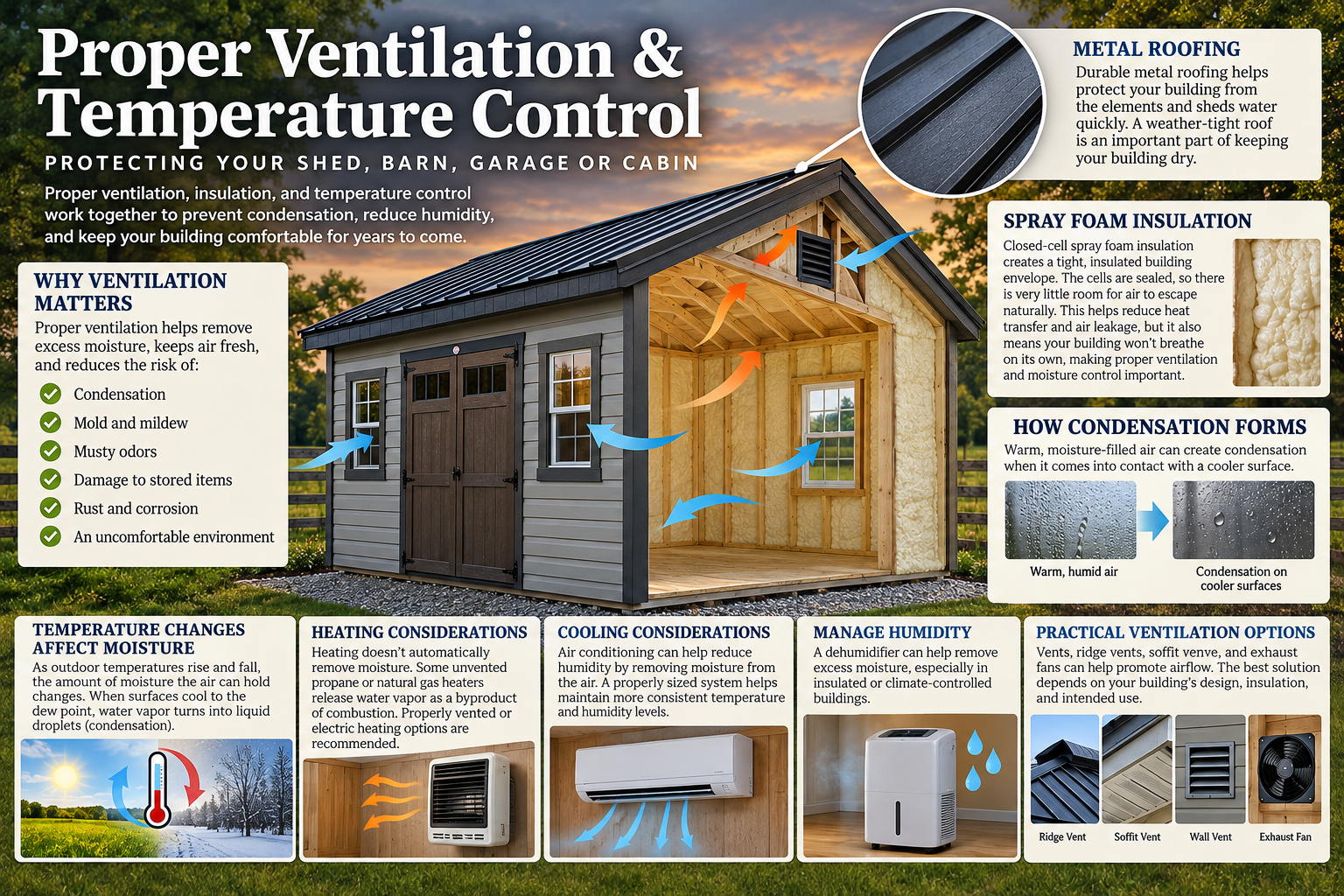
Whether you're using your Country Cabins building for storage, a workshop, a garage, a hobby space, or a backyard retreat, understanding how air, moisture, and temperature interact inside your building can help prevent condensation, excess humidity, and other moisture-related concerns.
One of the most overlooked aspects of owning a portable building is ventilation. While insulation helps regulate temperature, it doesn't eliminate moisture or replace the need for proper airflow.
Let's take a closer look at why ventilation matters and how you can maintain a comfortable, healthy environment inside your building.
Why Is Proper Ventilation So Important?
Every building experiences changes in temperature and humidity. As outdoor temperatures rise and fall, the conditions inside your shed, barn, garage, or cabin change as well.
When warm, moisture-filled air comes into contact with a cooler surface, condensation can form. You may notice this as water droplets on windows, metal surfaces, or other areas of your building.
Without adequate ventilation and moisture control, condensation can contribute to:
- Mold and mildew growth
- Musty odors
- Damage to stored belongings, tools, and equipment
- Moisture-related deterioration of wood and interior finishes
- Rust and corrosion on metal surfaces
- An uncomfortable indoor environment
The good news? Many condensation problems can be prevented or reduced with proper ventilation, humidity management, and temperature control.
Understanding Condensation: Where Does the Moisture Come From?
A common misconception is that moisture inside a building must mean there is a roof leak or another construction issue.
In reality, condensation can occur naturally, even in a properly constructed building.
Air contains water vapor, and the amount of moisture it can hold before condensation occurs depends on its temperature. When humid air encounters a surface cold enough to reach its dew point, water vapor changes into liquid droplets.
Everyday activities can introduce additional moisture into your building, including:
- Opening doors and windows during humid weather
- Running certain types of heaters
- Bringing in wet equipment, lawnmowers, or vehicles
- Storing damp materials
- Occupying the building for extended periods
- Cooking, showering, or other activities that produce moisture
Heating and cooling a building also change the relative humidity and the temperatures of interior surfaces. These changes can create conditions where condensation is more likely to occur.
It's important to understand that heating and cooling do not automatically create water vapor. Rather, temperature changes influence how existing moisture behaves and whether condensation develops.
This is why controlling both temperature and humidity is so important.
Spray Foam Insulation: Understanding How It Affects Airflow
Spray foam insulation is a popular upgrade for sheds, garages, workshops, and cabins because of its ability to reduce heat transfer and air leakage.
At Country Cabins, we understand that customers often choose spray foam insulation to make their buildings more comfortable and energy-efficient.
However, it's important to understand how closed-cell spray foam works.
What Makes Closed-Cell Spray Foam Different?
Closed-cell spray foam is made up of tiny, sealed cells that create a dense insulation barrier.
When properly installed, it helps:
- Reduce unwanted air leakage through insulated surfaces
- Limit heat transfer
- Resist moisture movement through the foam
- Improve temperature stability
- Create a more tightly sealed building envelope
Because closed-cell spray foam significantly restricts air movement through the areas where it is applied, the building may have fewer opportunities for incidental air exchange.
This is an important distinction: insulation helps control temperature, but it does not provide ventilation.
Why Ventilation Matters in a Spray-Foam-Insulated Building
Imagine closing all the windows and doors in your home while continuously introducing moisture into the air.
Without a way to remove that moisture, indoor humidity can increase.
A similar situation can occur in a tightly insulated shed, barn, garage, or cabin.
Closed-cell spray foam restricts air leakage through the insulated portions of the structure. While this is beneficial for energy efficiency, it also means you should not rely on those surfaces to provide natural air exchange.
Moisture introduced through normal activities, outdoor air, or heating equipment can remain inside unless it is managed through ventilation, dehumidification, or properly designed heating and cooling equipment.
As temperatures fluctuate, excess humidity can lead to condensation on cooler surfaces such as windows, doors, and exposed metal.
Spray foam insulation does not cause condensation on its own. However, a tightly sealed building without adequate moisture management may be more susceptible to indoor humidity buildup.
For this reason, ventilation and humidity control should be considered when planning an insulated building, especially one that will be heated, cooled, or occupied regularly.
Heating and Cooling: What Every Building Owner Should Know
Adding a heater or air-conditioning unit can make your building more comfortable, but temperature control and moisture control should work together.
Heating Your Building
Heating raises the indoor air temperature, but it doesn't automatically remove moisture.
As warm air circulates, it may come into contact with cooler windows, doors, or other surfaces, creating condensation if those surfaces are below the air's dew point.
Certain heating methods can introduce additional moisture. For example, unvented propane or natural gas heaters release water vapor into the indoor environment as part of combustion.
Whenever possible, consider properly installed, vented heating equipment or electric heating systems suitable for your building's intended use.
Cooling Your Building
Air conditioning can help reduce humidity because moisture is removed from the air as it passes over the cooling coil.
However, an improperly sized or poorly operated cooling system may not adequately control humidity.
Cooling a building can also create cold surfaces where condensation may develop if warm, humid outdoor air enters.
For buildings used regularly, properly sized heating and cooling equipment can help maintain more consistent conditions throughout the year.
Practical Ways to Improve Ventilation and Reduce Condensation
There are several steps you can take to help manage moisture and maintain a more comfortable environment inside your building.
1. Consider Proper Ventilation
Ridge vents, soffit vents, wall vents, exhaust fans, or other ventilation systems may help promote airflow when appropriately designed for the building.
The best solution depends on the building's construction, insulation, and intended use.
For spray-foam-insulated buildings, traditional attic ventilation may not be appropriate for every roof assembly. Ventilation should be planned around the insulation system rather than added without considering how the building is sealed.
2. Monitor Indoor Humidity
A simple digital hygrometer can help you monitor humidity levels.
For many enclosed spaces, maintaining relative humidity around 30%–50%, when practical, can help reduce the likelihood of mold and condensation. In some conditions, even lower humidity may be needed to prevent condensation on cold surfaces.
3. Use a Dehumidifier When Needed
If your building experiences elevated humidity, a properly sized dehumidifier can help remove excess moisture.
This can be particularly useful in insulated workshops, storage buildings, and cabins.
4. Maintain Consistent Temperatures
Large temperature swings can contribute to condensation when surfaces cool below the indoor air's dew point.
Maintaining more consistent indoor conditions can help reduce this risk.
5. Be Mindful of Moisture Sources
Wet equipment, damp storage items, unvented combustion heaters, and other moisture sources can quickly increase indoor humidity.
Whenever possible, allow wet items to dry before storing them inside.
6. Plan for Your Building's Intended Use
A building used for occasional lawn equipment storage has different ventilation and moisture-control needs than a heated workshop, finished cabin, or regularly occupied space.
Thinking about how you'll use your building before selecting insulation, heating, cooling, and ventilation options can make a significant difference.
Does Every Shed, Barn, Garage or Cabin Need the Same Ventilation?
Not necessarily!
Every building is different, and ventilation requirements depend on several factors, including:
- Building size and design
- Type and location of insulation
- Whether the building is heated or cooled
- Local climate and seasonal humidity
- Intended use and frequency of occupancy
- Interior finishes and moisture-producing activities
For example, an unconditioned storage shed may benefit from a different ventilation approach than a fully insulated, climate-controlled workshop.
Similarly, a cabin intended for regular occupancy may require dedicated mechanical ventilation and additional building-code considerations.
There is no one-size-fits-all solution.
Protecting Your Investment Starts With Understanding Your Building
At Country Cabins, we take pride in building quality structures designed to serve our customers for years to come.
But proper building care doesn't stop at delivery.
Understanding how insulation, ventilation, humidity, and temperature work together is an important part of maintaining your shed, barn, garage, or cabin.
Whether you're storing seasonal decorations, protecting valuable equipment, creating a backyard workshop, or enjoying your own cabin retreat, a little planning can go a long way toward preventing moisture-related problems.
Remember: A well-insulated building isn't necessarily a well-ventilated building. Both insulation and proper moisture management play important roles in protecting your investment.
Building Your Perfect Space? Let's Talk Options!
Country Cabins offers a variety of customization options to help you create a building that fits your needs, including insulation, windows, doors, and other upgrades.
Our team can help you explore available inventory options and understand what to consider when planning your building. Looking to design your own, check out our 3D Modeler to get started.
Contact Country Cabins or your local Preferred Dealer to learn more about customizing your shed, barn, garage, or cabin.
Country Cabins — Quality You Can Trust.